

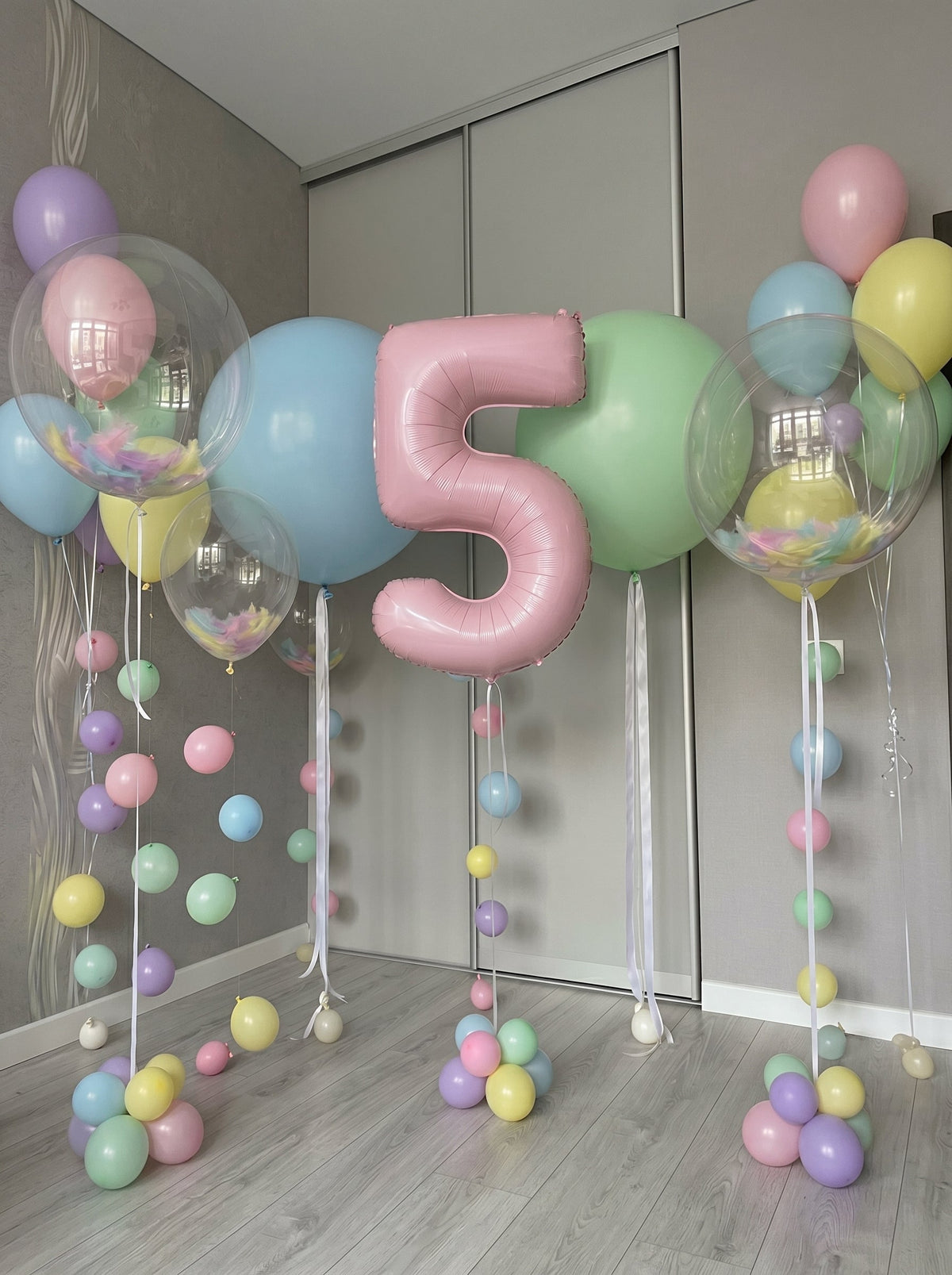
A character reference in a birthday brief can mean several different requests. You might already have a finished party item, want a new character image printed or made, or simply like a group of colours alongside a birthday name and number. Explain which request you mean before asking a decorator to quote.
For a Dubai celebration, decide what belongs in the production brief and what remains unresolved. A personalisation option, a price or your approval of a design should not be recorded as permission from the owner of third-party artwork. This guide helps classify the request; it does not determine the legal status of an actual design.
Identify the item and the work you are requesting
Separate an item you have obtained from something you want the supplier to create. If you want a printed panel as well as balloons, name the panel explicitly. If the reference is only for colours, describe those colours in words and say that the character artwork is outside the current request.
| Element and source | Work requested | Evidence or open question | Current brief decision |
|---|---|---|---|
| A finished item you obtained separately. | Describe the actual item and any positioning or other work you want discussed. | Keep the item information. Do not treat buying it as permission to reproduce its artwork. | Identify the limited request and ask whether the supplier can agree it; no arrangement is assumed. |
| New artwork, a print or a made-to-order character element. | Name the property and the exact proposed use, rather than asking to “match the picture”. | Record any actual rights-owner permission and its stated scope, or the unresolved permission question. | Keep the element pending while that question is unresolved; omit it from the current production request if needed. |
| An original visual enquiry using a name, number and general palette. | State the requested words, number and colours without asking for reproduced character artwork. | Ask what design the supplier can actually propose. No particular original design or legal clearance is established here. | Discuss this defined alternative on its own terms. |
These are planning categories, not findings that an item or activity is permitted or prohibited. Keep any other requested work visible instead of letting it become an unspoken addition.
Use the rights owner’s route for the actual intended use
Disney provides a useful named example. Its Studios Licensing FAQ, checked on 22 October 2026, directs non-commercial enquiries including themed private parties to its Legal Department and links a permission portal. That private-party enquiry route should not be transferred to a commercial decorator or manufacturer as permission to make goods.
The FAQ separately says its Television Animation inbox does not handle requests to create artwork or consumer goods, and points readers towards Consumer Products. Disney also has a separate Consumer Products licensing business. The relevant property and proposed use matter; this example supplies neither a universal process for other brands nor a licence for Lunar Moments.
Disney’s permission-request page asks which property is involved, how it would be used and the intended dates. It expressly distinguishes submitting a request or receiving an acknowledgement from receiving permission. No request was submitted for this guide.
Read the actual document before labelling an element approved
If you have a permission document, keep its stated scope beside the proposed element. Identify who it names, which property and use it covers, and any dates or conditions actually written there. If the proposed supplier’s production role is unclear, leave that question open rather than extending the document yourself.
Use precise status labels in your notes: “no permission document supplied”, “request acknowledged”, or “document received; scope to clarify”. Where permission is documented for a specific use, describe that use accurately. A design preview approved by the organiser is a different record.
For a fictional example, an organiser has an acknowledgement for a private-party enquiry but also wants a supplier to make new character-printed decorations. The acknowledgement does not settle that production request. The organiser can leave that element pending or remove it while discussing a separate visual direction. This is an illustrative decision, not a real customer case or a ruling on eligibility.
Take the remaining design request to the supplier
Once the artwork decision is clear, the existing wording guide helps with exact text, while the palette guide covers colour references and substitutions. Those later design tasks do not resolve third-party permission.
For an actual composition to discuss, Lunar Moments’ Little Pastel Party lists one 40-inch custom number balloon, two 36-inch balloons, two bubble balloons and ten helium balloons. That component list does not establish character artwork rights or a particular original-design capability.
Ask Lunar Moments about the defined decoration request, identifying separately obtained items, requested new work and any element left out or pending. Agree what the team can actually supply and the complete scope. The quote guidance explains the remaining confirmations; an enquiry or quote does not confirm a booking.
Artwork-permission questions
Does a private-party permission request cover a commercial decorator’s production?
Do not assume that it does. Disney’s FAQ gives a private non-commercial enquiry route and separately excludes artwork and manufacturing requests from its Television Animation inbox. Check the actual property, intended use and documented scope.
Is a request acknowledgement permission to use the artwork?
Disney’s request page says submission or acknowledgement does not grant permission. Keep the actual decision separate from an acknowledgement and from your own design approval.
Can I ask about a name, number and palette while the character element is unresolved?
You can omit the character element from the current request and discuss that separate visual brief. Ask what the supplier can propose; this guide does not promise a particular design or certify legal clearance.


